Carroll Suarez
What About TVs and Entertainment?
In a tiny living room, a giant TV is a non-starter. But a projector? That’s a different story. Small projectors can beam onto a blank wall or a roll-down screen, then disappear into a drawer. Tablets on adjustable arms work too. The point is: don’t let entertainment dictate your layout. Let it adapt to your space.
The Bottom Line on Compact Living Rooms
Living room solutions for tiny homes and van conversions aren’t about deprivation. They’re about intention. Every piece you bring in should pull its weight — literally and figuratively. When you get it right, a 100-square-foot living area can feel cozy, functional, and honestly? Pretty darn charming.
So measure carefully, think in threes (seat, sleep, store), and don’t be afraid to go custom or modular. Your tiny space isn’t a limitation. It’s a design challenge waiting to be solved.
Lighting and Layout Tricks That Make Small Rooms Feel Bigger
Furniture is only half the battle. The other half is how you light and arrange the space. A few quick wins:
- Use mirrors on one wall to bounce light and create depth.
- Choose warm LED strip lighting under shelves instead of a single overhead bulb.
- Keep a clear path from door to seating — clutter kills the illusion of space.
- Pick light-colored cushions and curtains; dark colors shrink a room.
And here’s a small but powerful trick: raise your seating just a little. Low furniture can make a ceiling feel lower. A slightly taller sofa or bench opens up the visual field.
What About TVs and Entertainment?
In a tiny living room, a giant TV is a non-starter. But a projector? That’s a different story. Small projectors can beam onto a blank wall or a roll-down screen, then disappear into a drawer. Tablets on adjustable arms work too. The point is: don’t let entertainment dictate your layout. Let it adapt to your space.
The Bottom Line on Compact Living Rooms
Living room solutions for tiny homes and van conversions aren’t about deprivation. They’re about intention. Every piece you bring in should pull its weight — literally and figuratively. When you get it right, a 100-square-foot living area can feel cozy, functional, and honestly? Pretty darn charming.
So measure carefully, think in threes (seat, sleep, store), and don’t be afraid to go custom or modular. Your tiny space isn’t a limitation. It’s a design challenge waiting to be solved.
Lighting and Layout Tricks That Make Small Rooms Feel Bigger
Furniture is only half the battle. The other half is how you light and arrange the space. A few quick wins:
- Use mirrors on one wall to bounce light and create depth.
- Choose warm LED strip lighting under shelves instead of a single overhead bulb.
- Keep a clear path from door to seating — clutter kills the illusion of space.
- Pick light-colored cushions and curtains; dark colors shrink a room.
And here’s a small but powerful trick: raise your seating just a little. Low furniture can make a ceiling feel lower. A slightly taller sofa or bench opens up the visual field.
What About TVs and Entertainment?
In a tiny living room, a giant TV is a non-starter. But a projector? That’s a different story. Small projectors can beam onto a blank wall or a roll-down screen, then disappear into a drawer. Tablets on adjustable arms work too. The point is: don’t let entertainment dictate your layout. Let it adapt to your space.
The Bottom Line on Compact Living Rooms
Living room solutions for tiny homes and van conversions aren’t about deprivation. They’re about intention. Every piece you bring in should pull its weight — literally and figuratively. When you get it right, a 100-square-foot living area can feel cozy, functional, and honestly? Pretty darn charming.
So measure carefully, think in threes (seat, sleep, store), and don’t be afraid to go custom or modular. Your tiny space isn’t a limitation. It’s a design challenge waiting to be solved.
Choosing the Right Materials for Small Spaces
Material matters more than you’d think. In a compact space, heavy furniture feels… well, heavy. It weighs down the room visually and physically. Here’s a quick comparison:
| Material | Pros | Cons |
|---|---|---|
| Lightweight wood (bamboo, pine) | Easy to move, warm look | Can scratch easily |
| Metal frames | Durable, slim profile | Can feel cold |
| Upholstered foam | Comfortable, soft | Bulky if not compressed |
| Recycled plastic | Weatherproof, light | Less cozy |
For van life especially, lightweight wins. Every pound counts when you’re driving up a mountain pass.
Lighting and Layout Tricks That Make Small Rooms Feel Bigger
Furniture is only half the battle. The other half is how you light and arrange the space. A few quick wins:
- Use mirrors on one wall to bounce light and create depth.
- Choose warm LED strip lighting under shelves instead of a single overhead bulb.
- Keep a clear path from door to seating — clutter kills the illusion of space.
- Pick light-colored cushions and curtains; dark colors shrink a room.
And here’s a small but powerful trick: raise your seating just a little. Low furniture can make a ceiling feel lower. A slightly taller sofa or bench opens up the visual field.
What About TVs and Entertainment?
In a tiny living room, a giant TV is a non-starter. But a projector? That’s a different story. Small projectors can beam onto a blank wall or a roll-down screen, then disappear into a drawer. Tablets on adjustable arms work too. The point is: don’t let entertainment dictate your layout. Let it adapt to your space.
The Bottom Line on Compact Living Rooms
Living room solutions for tiny homes and van conversions aren’t about deprivation. They’re about intention. Every piece you bring in should pull its weight — literally and figuratively. When you get it right, a 100-square-foot living area can feel cozy, functional, and honestly? Pretty darn charming.
So measure carefully, think in threes (seat, sleep, store), and don’t be afraid to go custom or modular. Your tiny space isn’t a limitation. It’s a design challenge waiting to be solved.
Choosing the Right Materials for Small Spaces
Material matters more than you’d think. In a compact space, heavy furniture feels… well, heavy. It weighs down the room visually and physically. Here’s a quick comparison:
| Material | Pros | Cons |
|---|---|---|
| Lightweight wood (bamboo, pine) | Easy to move, warm look | Can scratch easily |
| Metal frames | Durable, slim profile | Can feel cold |
| Upholstered foam | Comfortable, soft | Bulky if not compressed |
| Recycled plastic | Weatherproof, light | Less cozy |
For van life especially, lightweight wins. Every pound counts when you’re driving up a mountain pass.
Lighting and Layout Tricks That Make Small Rooms Feel Bigger
Furniture is only half the battle. The other half is how you light and arrange the space. A few quick wins:
- Use mirrors on one wall to bounce light and create depth.
- Choose warm LED strip lighting under shelves instead of a single overhead bulb.
- Keep a clear path from door to seating — clutter kills the illusion of space.
- Pick light-colored cushions and curtains; dark colors shrink a room.
And here’s a small but powerful trick: raise your seating just a little. Low furniture can make a ceiling feel lower. A slightly taller sofa or bench opens up the visual field.
What About TVs and Entertainment?
In a tiny living room, a giant TV is a non-starter. But a projector? That’s a different story. Small projectors can beam onto a blank wall or a roll-down screen, then disappear into a drawer. Tablets on adjustable arms work too. The point is: don’t let entertainment dictate your layout. Let it adapt to your space.
The Bottom Line on Compact Living Rooms
Living room solutions for tiny homes and van conversions aren’t about deprivation. They’re about intention. Every piece you bring in should pull its weight — literally and figuratively. When you get it right, a 100-square-foot living area can feel cozy, functional, and honestly? Pretty darn charming.
So measure carefully, think in threes (seat, sleep, store), and don’t be afraid to go custom or modular. Your tiny space isn’t a limitation. It’s a design challenge waiting to be solved.
Ottomans and Poufs: The Unsung Heroes
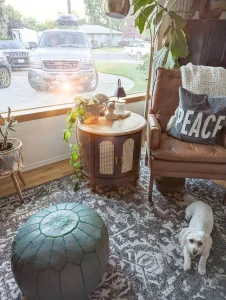
Don’t underestimate a good ottoman. It’s a footrest, a seat, a side table (with a tray on top), and often a storage box in disguise. Poufs — those soft, round cushions — are lightweight, easy to move, and add a pop of color without bulk. Stack two or three in a corner and you’ve got flexible seating for guests.
Choosing the Right Materials for Small Spaces
Material matters more than you’d think. In a compact space, heavy furniture feels… well, heavy. It weighs down the room visually and physically. Here’s a quick comparison:
| Material | Pros | Cons |
|---|---|---|
| Lightweight wood (bamboo, pine) | Easy to move, warm look | Can scratch easily |
| Metal frames | Durable, slim profile | Can feel cold |
| Upholstered foam | Comfortable, soft | Bulky if not compressed |
| Recycled plastic | Weatherproof, light | Less cozy |
For van life especially, lightweight wins. Every pound counts when you’re driving up a mountain pass.
Lighting and Layout Tricks That Make Small Rooms Feel Bigger
Furniture is only half the battle. The other half is how you light and arrange the space. A few quick wins:
- Use mirrors on one wall to bounce light and create depth.
- Choose warm LED strip lighting under shelves instead of a single overhead bulb.
- Keep a clear path from door to seating — clutter kills the illusion of space.
- Pick light-colored cushions and curtains; dark colors shrink a room.
And here’s a small but powerful trick: raise your seating just a little. Low furniture can make a ceiling feel lower. A slightly taller sofa or bench opens up the visual field.
What About TVs and Entertainment?
In a tiny living room, a giant TV is a non-starter. But a projector? That’s a different story. Small projectors can beam onto a blank wall or a roll-down screen, then disappear into a drawer. Tablets on adjustable arms work too. The point is: don’t let entertainment dictate your layout. Let it adapt to your space.
The Bottom Line on Compact Living Rooms
Living room solutions for tiny homes and van conversions aren’t about deprivation. They’re about intention. Every piece you bring in should pull its weight — literally and figuratively. When you get it right, a 100-square-foot living area can feel cozy, functional, and honestly? Pretty darn charming.
So measure carefully, think in threes (seat, sleep, store), and don’t be afraid to go custom or modular. Your tiny space isn’t a limitation. It’s a design challenge waiting to be solved.
Ottomans and Poufs: The Unsung Heroes
Don’t underestimate a good ottoman. It’s a footrest, a seat, a side table (with a tray on top), and often a storage box in disguise. Poufs — those soft, round cushions — are lightweight, easy to move, and add a pop of color without bulk. Stack two or three in a corner and you’ve got flexible seating for guests.
Choosing the Right Materials for Small Spaces
Material matters more than you’d think. In a compact space, heavy furniture feels… well, heavy. It weighs down the room visually and physically. Here’s a quick comparison:
| Material | Pros | Cons |
|---|---|---|
| Lightweight wood (bamboo, pine) | Easy to move, warm look | Can scratch easily |
| Metal frames | Durable, slim profile | Can feel cold |
| Upholstered foam | Comfortable, soft | Bulky if not compressed |
| Recycled plastic | Weatherproof, light | Less cozy |
For van life especially, lightweight wins. Every pound counts when you’re driving up a mountain pass.
Lighting and Layout Tricks That Make Small Rooms Feel Bigger
Furniture is only half the battle. The other half is how you light and arrange the space. A few quick wins:
- Use mirrors on one wall to bounce light and create depth.
- Choose warm LED strip lighting under shelves instead of a single overhead bulb.
- Keep a clear path from door to seating — clutter kills the illusion of space.
- Pick light-colored cushions and curtains; dark colors shrink a room.
And here’s a small but powerful trick: raise your seating just a little. Low furniture can make a ceiling feel lower. A slightly taller sofa or bench opens up the visual field.
What About TVs and Entertainment?
In a tiny living room, a giant TV is a non-starter. But a projector? That’s a different story. Small projectors can beam onto a blank wall or a roll-down screen, then disappear into a drawer. Tablets on adjustable arms work too. The point is: don’t let entertainment dictate your layout. Let it adapt to your space.
The Bottom Line on Compact Living Rooms
Living room solutions for tiny homes and van conversions aren’t about deprivation. They’re about intention. Every piece you bring in should pull its weight — literally and figuratively. When you get it right, a 100-square-foot living area can feel cozy, functional, and honestly? Pretty darn charming.
So measure carefully, think in threes (seat, sleep, store), and don’t be afraid to go custom or modular. Your tiny space isn’t a limitation. It’s a design challenge waiting to be solved.
Modular furniture is having a moment — and for tiny living, it’s a game-changer. These are sofas and seating units made of separate pieces you can rearrange, stack, or split apart. Want a loveseat today and two armchairs tomorrow? Done.
Brands like Lovesac and similar modular systems are popular, but there are budget-friendly options too. The key is to look for lightweight modules with washable covers. In a van, spills happen. In a tiny home, dust happens. Washable is non-negotiable.
Ottomans and Poufs: The Unsung Heroes
Don’t underestimate a good ottoman. It’s a footrest, a seat, a side table (with a tray on top), and often a storage box in disguise. Poufs — those soft, round cushions — are lightweight, easy to move, and add a pop of color without bulk. Stack two or three in a corner and you’ve got flexible seating for guests.
Choosing the Right Materials for Small Spaces
Material matters more than you’d think. In a compact space, heavy furniture feels… well, heavy. It weighs down the room visually and physically. Here’s a quick comparison:
| Material | Pros | Cons |
|---|---|---|
| Lightweight wood (bamboo, pine) | Easy to move, warm look | Can scratch easily |
| Metal frames | Durable, slim profile | Can feel cold |
| Upholstered foam | Comfortable, soft | Bulky if not compressed |
| Recycled plastic | Weatherproof, light | Less cozy |
For van life especially, lightweight wins. Every pound counts when you’re driving up a mountain pass.
Lighting and Layout Tricks That Make Small Rooms Feel Bigger
Furniture is only half the battle. The other half is how you light and arrange the space. A few quick wins:
- Use mirrors on one wall to bounce light and create depth.
- Choose warm LED strip lighting under shelves instead of a single overhead bulb.
- Keep a clear path from door to seating — clutter kills the illusion of space.
- Pick light-colored cushions and curtains; dark colors shrink a room.
And here’s a small but powerful trick: raise your seating just a little. Low furniture can make a ceiling feel lower. A slightly taller sofa or bench opens up the visual field.
What About TVs and Entertainment?
In a tiny living room, a giant TV is a non-starter. But a projector? That’s a different story. Small projectors can beam onto a blank wall or a roll-down screen, then disappear into a drawer. Tablets on adjustable arms work too. The point is: don’t let entertainment dictate your layout. Let it adapt to your space.
The Bottom Line on Compact Living Rooms
Living room solutions for tiny homes and van conversions aren’t about deprivation. They’re about intention. Every piece you bring in should pull its weight — literally and figuratively. When you get it right, a 100-square-foot living area can feel cozy, functional, and honestly? Pretty darn charming.
So measure carefully, think in threes (seat, sleep, store), and don’t be afraid to go custom or modular. Your tiny space isn’t a limitation. It’s a design challenge waiting to be solved.
Modular and Sectional Pieces That Flex With You
Modular furniture is having a moment — and for tiny living, it’s a game-changer. These are sofas and seating units made of separate pieces you can rearrange, stack, or split apart. Want a loveseat today and two armchairs tomorrow? Done.
Brands like Lovesac and similar modular systems are popular, but there are budget-friendly options too. The key is to look for lightweight modules with washable covers. In a van, spills happen. In a tiny home, dust happens. Washable is non-negotiable.
Ottomans and Poufs: The Unsung Heroes
Don’t underestimate a good ottoman. It’s a footrest, a seat, a side table (with a tray on top), and often a storage box in disguise. Poufs — those soft, round cushions — are lightweight, easy to move, and add a pop of color without bulk. Stack two or three in a corner and you’ve got flexible seating for guests.
Choosing the Right Materials for Small Spaces
Material matters more than you’d think. In a compact space, heavy furniture feels… well, heavy. It weighs down the room visually and physically. Here’s a quick comparison:
| Material | Pros | Cons |
|---|---|---|
| Lightweight wood (bamboo, pine) | Easy to move, warm look | Can scratch easily |
| Metal frames | Durable, slim profile | Can feel cold |
| Upholstered foam | Comfortable, soft | Bulky if not compressed |
| Recycled plastic | Weatherproof, light | Less cozy |
For van life especially, lightweight wins. Every pound counts when you’re driving up a mountain pass.
Lighting and Layout Tricks That Make Small Rooms Feel Bigger
Furniture is only half the battle. The other half is how you light and arrange the space. A few quick wins:
- Use mirrors on one wall to bounce light and create depth.
- Choose warm LED strip lighting under shelves instead of a single overhead bulb.
- Keep a clear path from door to seating — clutter kills the illusion of space.
- Pick light-colored cushions and curtains; dark colors shrink a room.
And here’s a small but powerful trick: raise your seating just a little. Low furniture can make a ceiling feel lower. A slightly taller sofa or bench opens up the visual field.
What About TVs and Entertainment?
In a tiny living room, a giant TV is a non-starter. But a projector? That’s a different story. Small projectors can beam onto a blank wall or a roll-down screen, then disappear into a drawer. Tablets on adjustable arms work too. The point is: don’t let entertainment dictate your layout. Let it adapt to your space.
The Bottom Line on Compact Living Rooms
Living room solutions for tiny homes and van conversions aren’t about deprivation. They’re about intention. Every piece you bring in should pull its weight — literally and figuratively. When you get it right, a 100-square-foot living area can feel cozy, functional, and honestly? Pretty darn charming.
So measure carefully, think in threes (seat, sleep, store), and don’t be afraid to go custom or modular. Your tiny space isn’t a limitation. It’s a design challenge waiting to be solved.
Modular and Sectional Pieces That Flex With You
Modular furniture is having a moment — and for tiny living, it’s a game-changer. These are sofas and seating units made of separate pieces you can rearrange, stack, or split apart. Want a loveseat today and two armchairs tomorrow? Done.
Brands like Lovesac and similar modular systems are popular, but there are budget-friendly options too. The key is to look for lightweight modules with washable covers. In a van, spills happen. In a tiny home, dust happens. Washable is non-negotiable.
Ottomans and Poufs: The Unsung Heroes
Don’t underestimate a good ottoman. It’s a footrest, a seat, a side table (with a tray on top), and often a storage box in disguise. Poufs — those soft, round cushions — are lightweight, easy to move, and add a pop of color without bulk. Stack two or three in a corner and you’ve got flexible seating for guests.
Choosing the Right Materials for Small Spaces
Material matters more than you’d think. In a compact space, heavy furniture feels… well, heavy. It weighs down the room visually and physically. Here’s a quick comparison:
| Material | Pros | Cons |
|---|---|---|
| Lightweight wood (bamboo, pine) | Easy to move, warm look | Can scratch easily |
| Metal frames | Durable, slim profile | Can feel cold |
| Upholstered foam | Comfortable, soft | Bulky if not compressed |
| Recycled plastic | Weatherproof, light | Less cozy |
For van life especially, lightweight wins. Every pound counts when you’re driving up a mountain pass.
Lighting and Layout Tricks That Make Small Rooms Feel Bigger
Furniture is only half the battle. The other half is how you light and arrange the space. A few quick wins:
- Use mirrors on one wall to bounce light and create depth.
- Choose warm LED strip lighting under shelves instead of a single overhead bulb.
- Keep a clear path from door to seating — clutter kills the illusion of space.
- Pick light-colored cushions and curtains; dark colors shrink a room.
And here’s a small but powerful trick: raise your seating just a little. Low furniture can make a ceiling feel lower. A slightly taller sofa or bench opens up the visual field.
What About TVs and Entertainment?
In a tiny living room, a giant TV is a non-starter. But a projector? That’s a different story. Small projectors can beam onto a blank wall or a roll-down screen, then disappear into a drawer. Tablets on adjustable arms work too. The point is: don’t let entertainment dictate your layout. Let it adapt to your space.
The Bottom Line on Compact Living Rooms
Living room solutions for tiny homes and van conversions aren’t about deprivation. They’re about intention. Every piece you bring in should pull its weight — literally and figuratively. When you get it right, a 100-square-foot living area can feel cozy, functional, and honestly? Pretty darn charming.
So measure carefully, think in threes (seat, sleep, store), and don’t be afraid to go custom or modular. Your tiny space isn’t a limitation. It’s a design challenge waiting to be solved.
When floor space is precious, go vertical. Floating shelves, wall-mounted fold-down desks, and even fold-away tables that hinge off the wall — these are your friends. A wall-mounted drop-leaf table, for instance, gives you a workspace or eating area that vanishes when you don’t need it.
And don’t overlook the humble wall. In a van, every inch of vertical wall is a chance for a slim shelf, a hook, or a magnetic strip. It sounds small, but it adds up fast.
Modular and Sectional Pieces That Flex With You
Modular furniture is having a moment — and for tiny living, it’s a game-changer. These are sofas and seating units made of separate pieces you can rearrange, stack, or split apart. Want a loveseat today and two armchairs tomorrow? Done.
Brands like Lovesac and similar modular systems are popular, but there are budget-friendly options too. The key is to look for lightweight modules with washable covers. In a van, spills happen. In a tiny home, dust happens. Washable is non-negotiable.
Ottomans and Poufs: The Unsung Heroes
Don’t underestimate a good ottoman. It’s a footrest, a seat, a side table (with a tray on top), and often a storage box in disguise. Poufs — those soft, round cushions — are lightweight, easy to move, and add a pop of color without bulk. Stack two or three in a corner and you’ve got flexible seating for guests.
Choosing the Right Materials for Small Spaces
Material matters more than you’d think. In a compact space, heavy furniture feels… well, heavy. It weighs down the room visually and physically. Here’s a quick comparison:
| Material | Pros | Cons |
|---|---|---|
| Lightweight wood (bamboo, pine) | Easy to move, warm look | Can scratch easily |
| Metal frames | Durable, slim profile | Can feel cold |
| Upholstered foam | Comfortable, soft | Bulky if not compressed |
| Recycled plastic | Weatherproof, light | Less cozy |
For van life especially, lightweight wins. Every pound counts when you’re driving up a mountain pass.
Lighting and Layout Tricks That Make Small Rooms Feel Bigger
Furniture is only half the battle. The other half is how you light and arrange the space. A few quick wins:
- Use mirrors on one wall to bounce light and create depth.
- Choose warm LED strip lighting under shelves instead of a single overhead bulb.
- Keep a clear path from door to seating — clutter kills the illusion of space.
- Pick light-colored cushions and curtains; dark colors shrink a room.
And here’s a small but powerful trick: raise your seating just a little. Low furniture can make a ceiling feel lower. A slightly taller sofa or bench opens up the visual field.
What About TVs and Entertainment?
In a tiny living room, a giant TV is a non-starter. But a projector? That’s a different story. Small projectors can beam onto a blank wall or a roll-down screen, then disappear into a drawer. Tablets on adjustable arms work too. The point is: don’t let entertainment dictate your layout. Let it adapt to your space.
The Bottom Line on Compact Living Rooms
Living room solutions for tiny homes and van conversions aren’t about deprivation. They’re about intention. Every piece you bring in should pull its weight — literally and figuratively. When you get it right, a 100-square-foot living area can feel cozy, functional, and honestly? Pretty darn charming.
So measure carefully, think in threes (seat, sleep, store), and don’t be afraid to go custom or modular. Your tiny space isn’t a limitation. It’s a design challenge waiting to be solved.
Wall-Mounted and Floating Furniture
When floor space is precious, go vertical. Floating shelves, wall-mounted fold-down desks, and even fold-away tables that hinge off the wall — these are your friends. A wall-mounted drop-leaf table, for instance, gives you a workspace or eating area that vanishes when you don’t need it.
And don’t overlook the humble wall. In a van, every inch of vertical wall is a chance for a slim shelf, a hook, or a magnetic strip. It sounds small, but it adds up fast.
Modular and Sectional Pieces That Flex With You
Modular furniture is having a moment — and for tiny living, it’s a game-changer. These are sofas and seating units made of separate pieces you can rearrange, stack, or split apart. Want a loveseat today and two armchairs tomorrow? Done.
Brands like Lovesac and similar modular systems are popular, but there are budget-friendly options too. The key is to look for lightweight modules with washable covers. In a van, spills happen. In a tiny home, dust happens. Washable is non-negotiable.
Ottomans and Poufs: The Unsung Heroes
Don’t underestimate a good ottoman. It’s a footrest, a seat, a side table (with a tray on top), and often a storage box in disguise. Poufs — those soft, round cushions — are lightweight, easy to move, and add a pop of color without bulk. Stack two or three in a corner and you’ve got flexible seating for guests.
Choosing the Right Materials for Small Spaces
Material matters more than you’d think. In a compact space, heavy furniture feels… well, heavy. It weighs down the room visually and physically. Here’s a quick comparison:
| Material | Pros | Cons |
|---|---|---|
| Lightweight wood (bamboo, pine) | Easy to move, warm look | Can scratch easily |
| Metal frames | Durable, slim profile | Can feel cold |
| Upholstered foam | Comfortable, soft | Bulky if not compressed |
| Recycled plastic | Weatherproof, light | Less cozy |
For van life especially, lightweight wins. Every pound counts when you’re driving up a mountain pass.
Lighting and Layout Tricks That Make Small Rooms Feel Bigger
Furniture is only half the battle. The other half is how you light and arrange the space. A few quick wins:
- Use mirrors on one wall to bounce light and create depth.
- Choose warm LED strip lighting under shelves instead of a single overhead bulb.
- Keep a clear path from door to seating — clutter kills the illusion of space.
- Pick light-colored cushions and curtains; dark colors shrink a room.
And here’s a small but powerful trick: raise your seating just a little. Low furniture can make a ceiling feel lower. A slightly taller sofa or bench opens up the visual field.
What About TVs and Entertainment?
In a tiny living room, a giant TV is a non-starter. But a projector? That’s a different story. Small projectors can beam onto a blank wall or a roll-down screen, then disappear into a drawer. Tablets on adjustable arms work too. The point is: don’t let entertainment dictate your layout. Let it adapt to your space.
The Bottom Line on Compact Living Rooms
Living room solutions for tiny homes and van conversions aren’t about deprivation. They’re about intention. Every piece you bring in should pull its weight — literally and figuratively. When you get it right, a 100-square-foot living area can feel cozy, functional, and honestly? Pretty darn charming.
So measure carefully, think in threes (seat, sleep, store), and don’t be afraid to go custom or modular. Your tiny space isn’t a limitation. It’s a design challenge waiting to be solved.
Wall-Mounted and Floating Furniture
When floor space is precious, go vertical. Floating shelves, wall-mounted fold-down desks, and even fold-away tables that hinge off the wall — these are your friends. A wall-mounted drop-leaf table, for instance, gives you a workspace or eating area that vanishes when you don’t need it.
And don’t overlook the humble wall. In a van, every inch of vertical wall is a chance for a slim shelf, a hook, or a magnetic strip. It sounds small, but it adds up fast.
Modular and Sectional Pieces That Flex With You
Modular furniture is having a moment — and for tiny living, it’s a game-changer. These are sofas and seating units made of separate pieces you can rearrange, stack, or split apart. Want a loveseat today and two armchairs tomorrow? Done.
Brands like Lovesac and similar modular systems are popular, but there are budget-friendly options too. The key is to look for lightweight modules with washable covers. In a van, spills happen. In a tiny home, dust happens. Washable is non-negotiable.
Ottomans and Poufs: The Unsung Heroes
Don’t underestimate a good ottoman. It’s a footrest, a seat, a side table (with a tray on top), and often a storage box in disguise. Poufs — those soft, round cushions — are lightweight, easy to move, and add a pop of color without bulk. Stack two or three in a corner and you’ve got flexible seating for guests.
Choosing the Right Materials for Small Spaces
Material matters more than you’d think. In a compact space, heavy furniture feels… well, heavy. It weighs down the room visually and physically. Here’s a quick comparison:
| Material | Pros | Cons |
|---|---|---|
| Lightweight wood (bamboo, pine) | Easy to move, warm look | Can scratch easily |
| Metal frames | Durable, slim profile | Can feel cold |
| Upholstered foam | Comfortable, soft | Bulky if not compressed |
| Recycled plastic | Weatherproof, light | Less cozy |
For van life especially, lightweight wins. Every pound counts when you’re driving up a mountain pass.
Lighting and Layout Tricks That Make Small Rooms Feel Bigger
Furniture is only half the battle. The other half is how you light and arrange the space. A few quick wins:
- Use mirrors on one wall to bounce light and create depth.
- Choose warm LED strip lighting under shelves instead of a single overhead bulb.
- Keep a clear path from door to seating — clutter kills the illusion of space.
- Pick light-colored cushions and curtains; dark colors shrink a room.
And here’s a small but powerful trick: raise your seating just a little. Low furniture can make a ceiling feel lower. A slightly taller sofa or bench opens up the visual field.
What About TVs and Entertainment?
In a tiny living room, a giant TV is a non-starter. But a projector? That’s a different story. Small projectors can beam onto a blank wall or a roll-down screen, then disappear into a drawer. Tablets on adjustable arms work too. The point is: don’t let entertainment dictate your layout. Let it adapt to your space.
The Bottom Line on Compact Living Rooms
Living room solutions for tiny homes and van conversions aren’t about deprivation. They’re about intention. Every piece you bring in should pull its weight — literally and figuratively. When you get it right, a 100-square-foot living area can feel cozy, functional, and honestly? Pretty darn charming.
So measure carefully, think in threes (seat, sleep, store), and don’t be afraid to go custom or modular. Your tiny space isn’t a limitation. It’s a design challenge waiting to be solved.
Here’s a solution that doesn’t get nearly enough attention — storage-integrated seating. These are sofas and benches with lift-up seats or pull-out drawers underneath. In a tiny home, that hidden space becomes your linen closet, your tool drawer, or your “I don’t know where else to put this” zone.
Honestly, this is one of the best investments you can make. You’re not just buying a seat — you’re buying square footage you didn’t know you had.
DIY Bench Seating With Built-In Bins
If you’re handy — or know someone who is — a custom bench along one wall can solve multiple problems at once. It provides seating, hides storage bins, and can double as a dining spot with a small pull-out table. In van conversions, this is practically a rite of passage. Build it low, cushion it well, and you’ve got a living room that works overtime.
Wall-Mounted and Floating Furniture
When floor space is precious, go vertical. Floating shelves, wall-mounted fold-down desks, and even fold-away tables that hinge off the wall — these are your friends. A wall-mounted drop-leaf table, for instance, gives you a workspace or eating area that vanishes when you don’t need it.
And don’t overlook the humble wall. In a van, every inch of vertical wall is a chance for a slim shelf, a hook, or a magnetic strip. It sounds small, but it adds up fast.
Modular and Sectional Pieces That Flex With You
Modular furniture is having a moment — and for tiny living, it’s a game-changer. These are sofas and seating units made of separate pieces you can rearrange, stack, or split apart. Want a loveseat today and two armchairs tomorrow? Done.
Brands like Lovesac and similar modular systems are popular, but there are budget-friendly options too. The key is to look for lightweight modules with washable covers. In a van, spills happen. In a tiny home, dust happens. Washable is non-negotiable.
Ottomans and Poufs: The Unsung Heroes
Don’t underestimate a good ottoman. It’s a footrest, a seat, a side table (with a tray on top), and often a storage box in disguise. Poufs — those soft, round cushions — are lightweight, easy to move, and add a pop of color without bulk. Stack two or three in a corner and you’ve got flexible seating for guests.
Choosing the Right Materials for Small Spaces
Material matters more than you’d think. In a compact space, heavy furniture feels… well, heavy. It weighs down the room visually and physically. Here’s a quick comparison:
| Material | Pros | Cons |
|---|---|---|
| Lightweight wood (bamboo, pine) | Easy to move, warm look | Can scratch easily |
| Metal frames | Durable, slim profile | Can feel cold |
| Upholstered foam | Comfortable, soft | Bulky if not compressed |
| Recycled plastic | Weatherproof, light | Less cozy |
For van life especially, lightweight wins. Every pound counts when you’re driving up a mountain pass.
Lighting and Layout Tricks That Make Small Rooms Feel Bigger
Furniture is only half the battle. The other half is how you light and arrange the space. A few quick wins:
- Use mirrors on one wall to bounce light and create depth.
- Choose warm LED strip lighting under shelves instead of a single overhead bulb.
- Keep a clear path from door to seating — clutter kills the illusion of space.
- Pick light-colored cushions and curtains; dark colors shrink a room.
And here’s a small but powerful trick: raise your seating just a little. Low furniture can make a ceiling feel lower. A slightly taller sofa or bench opens up the visual field.
What About TVs and Entertainment?
In a tiny living room, a giant TV is a non-starter. But a projector? That’s a different story. Small projectors can beam onto a blank wall or a roll-down screen, then disappear into a drawer. Tablets on adjustable arms work too. The point is: don’t let entertainment dictate your layout. Let it adapt to your space.
The Bottom Line on Compact Living Rooms
Living room solutions for tiny homes and van conversions aren’t about deprivation. They’re about intention. Every piece you bring in should pull its weight — literally and figuratively. When you get it right, a 100-square-foot living area can feel cozy, functional, and honestly? Pretty darn charming.
So measure carefully, think in threes (seat, sleep, store), and don’t be afraid to go custom or modular. Your tiny space isn’t a limitation. It’s a design challenge waiting to be solved.
In a tiny home or van, nothing should do just one thing. That’s the golden rule. A couch that’s only a couch? That’s wasted real estate. But a couch that’s also a bed and also storage? Now we’re talking.
This mindset — sometimes called multi-functional design — is the backbone of every good compact living room. Before you buy anything, ask yourself: what three things can this piece do? If the answer is one, walk away.
Convertible Sofa Beds (The Classic for a Reason)
Sure, futons have a bad reputation. Those old wooden ones that squeaked and sagged? Forget them. Modern convertible sofas — especially the click-clack and pull-out styles designed for RVs — are a different beast entirely. Look for models with memory foam cushions and steel frames. They’re lighter, they last longer, and they won’t wreck your back.
One tip: measure your space twice, then measure again. Van conversions especially have odd angles and wheel wells that eat into your floor plan. A sofa that fits “almost” is a sofa that doesn’t fit.
Storage Sofas: Where the Cushions Hide Your Stuff
Here’s a solution that doesn’t get nearly enough attention — storage-integrated seating. These are sofas and benches with lift-up seats or pull-out drawers underneath. In a tiny home, that hidden space becomes your linen closet, your tool drawer, or your “I don’t know where else to put this” zone.
Honestly, this is one of the best investments you can make. You’re not just buying a seat — you’re buying square footage you didn’t know you had.
DIY Bench Seating With Built-In Bins
If you’re handy — or know someone who is — a custom bench along one wall can solve multiple problems at once. It provides seating, hides storage bins, and can double as a dining spot with a small pull-out table. In van conversions, this is practically a rite of passage. Build it low, cushion it well, and you’ve got a living room that works overtime.
Wall-Mounted and Floating Furniture
When floor space is precious, go vertical. Floating shelves, wall-mounted fold-down desks, and even fold-away tables that hinge off the wall — these are your friends. A wall-mounted drop-leaf table, for instance, gives you a workspace or eating area that vanishes when you don’t need it.
And don’t overlook the humble wall. In a van, every inch of vertical wall is a chance for a slim shelf, a hook, or a magnetic strip. It sounds small, but it adds up fast.
Modular and Sectional Pieces That Flex With You
Modular furniture is having a moment — and for tiny living, it’s a game-changer. These are sofas and seating units made of separate pieces you can rearrange, stack, or split apart. Want a loveseat today and two armchairs tomorrow? Done.
Brands like Lovesac and similar modular systems are popular, but there are budget-friendly options too. The key is to look for lightweight modules with washable covers. In a van, spills happen. In a tiny home, dust happens. Washable is non-negotiable.
Ottomans and Poufs: The Unsung Heroes
Don’t underestimate a good ottoman. It’s a footrest, a seat, a side table (with a tray on top), and often a storage box in disguise. Poufs — those soft, round cushions — are lightweight, easy to move, and add a pop of color without bulk. Stack two or three in a corner and you’ve got flexible seating for guests.
Choosing the Right Materials for Small Spaces
Material matters more than you’d think. In a compact space, heavy furniture feels… well, heavy. It weighs down the room visually and physically. Here’s a quick comparison:
| Material | Pros | Cons |
|---|---|---|
| Lightweight wood (bamboo, pine) | Easy to move, warm look | Can scratch easily |
| Metal frames | Durable, slim profile | Can feel cold |
| Upholstered foam | Comfortable, soft | Bulky if not compressed |
| Recycled plastic | Weatherproof, light | Less cozy |
For van life especially, lightweight wins. Every pound counts when you’re driving up a mountain pass.
Lighting and Layout Tricks That Make Small Rooms Feel Bigger
Furniture is only half the battle. The other half is how you light and arrange the space. A few quick wins:
- Use mirrors on one wall to bounce light and create depth.
- Choose warm LED strip lighting under shelves instead of a single overhead bulb.
- Keep a clear path from door to seating — clutter kills the illusion of space.
- Pick light-colored cushions and curtains; dark colors shrink a room.
And here’s a small but powerful trick: raise your seating just a little. Low furniture can make a ceiling feel lower. A slightly taller sofa or bench opens up the visual field.
What About TVs and Entertainment?
In a tiny living room, a giant TV is a non-starter. But a projector? That’s a different story. Small projectors can beam onto a blank wall or a roll-down screen, then disappear into a drawer. Tablets on adjustable arms work too. The point is: don’t let entertainment dictate your layout. Let it adapt to your space.
The Bottom Line on Compact Living Rooms
Living room solutions for tiny homes and van conversions aren’t about deprivation. They’re about intention. Every piece you bring in should pull its weight — literally and figuratively. When you get it right, a 100-square-foot living area can feel cozy, functional, and honestly? Pretty darn charming.
So measure carefully, think in threes (seat, sleep, store), and don’t be afraid to go custom or modular. Your tiny space isn’t a limitation. It’s a design challenge waiting to be solved.
Living small is a bit like solving a puzzle where every piece has to earn its place. You know the feeling — you look at your tiny home or freshly converted van, and you think, “Where exactly am I supposed to put a couch?” Well, here’s the deal: you don’t need a traditional couch. You need a smarter version of one. The good news is that compact living room solutions have gotten genuinely clever in the last few years, and honestly, some of them are better than full-sized furniture.
Let’s dive into what actually works — not the Pinterest-perfect stuff that falls apart after a month, but the real, practical ideas that hold up when you’re living in 150 square feet or less.
Start With the “One Piece, Three Jobs” Mindset
In a tiny home or van, nothing should do just one thing. That’s the golden rule. A couch that’s only a couch? That’s wasted real estate. But a couch that’s also a bed and also storage? Now we’re talking.
This mindset — sometimes called multi-functional design — is the backbone of every good compact living room. Before you buy anything, ask yourself: what three things can this piece do? If the answer is one, walk away.
Convertible Sofa Beds (The Classic for a Reason)
Sure, futons have a bad reputation. Those old wooden ones that squeaked and sagged? Forget them. Modern convertible sofas — especially the click-clack and pull-out styles designed for RVs — are a different beast entirely. Look for models with memory foam cushions and steel frames. They’re lighter, they last longer, and they won’t wreck your back.
One tip: measure your space twice, then measure again. Van conversions especially have odd angles and wheel wells that eat into your floor plan. A sofa that fits “almost” is a sofa that doesn’t fit.
Storage Sofas: Where the Cushions Hide Your Stuff
Here’s a solution that doesn’t get nearly enough attention — storage-integrated seating. These are sofas and benches with lift-up seats or pull-out drawers underneath. In a tiny home, that hidden space becomes your linen closet, your tool drawer, or your “I don’t know where else to put this” zone.
Honestly, this is one of the best investments you can make. You’re not just buying a seat — you’re buying square footage you didn’t know you had.
DIY Bench Seating With Built-In Bins
If you’re handy — or know someone who is — a custom bench along one wall can solve multiple problems at once. It provides seating, hides storage bins, and can double as a dining spot with a small pull-out table. In van conversions, this is practically a rite of passage. Build it low, cushion it well, and you’ve got a living room that works overtime.
Wall-Mounted and Floating Furniture
When floor space is precious, go vertical. Floating shelves, wall-mounted fold-down desks, and even fold-away tables that hinge off the wall — these are your friends. A wall-mounted drop-leaf table, for instance, gives you a workspace or eating area that vanishes when you don’t need it.
And don’t overlook the humble wall. In a van, every inch of vertical wall is a chance for a slim shelf, a hook, or a magnetic strip. It sounds small, but it adds up fast.
Modular and Sectional Pieces That Flex With You
Modular furniture is having a moment — and for tiny living, it’s a game-changer. These are sofas and seating units made of separate pieces you can rearrange, stack, or split apart. Want a loveseat today and two armchairs tomorrow? Done.
Brands like Lovesac and similar modular systems are popular, but there are budget-friendly options too. The key is to look for lightweight modules with washable covers. In a van, spills happen. In a tiny home, dust happens. Washable is non-negotiable.
Ottomans and Poufs: The Unsung Heroes
Don’t underestimate a good ottoman. It’s a footrest, a seat, a side table (with a tray on top), and often a storage box in disguise. Poufs — those soft, round cushions — are lightweight, easy to move, and add a pop of color without bulk. Stack two or three in a corner and you’ve got flexible seating for guests.
Choosing the Right Materials for Small Spaces
Material matters more than you’d think. In a compact space, heavy furniture feels… well, heavy. It weighs down the room visually and physically. Here’s a quick comparison:
| Material | Pros | Cons |
|---|---|---|
| Lightweight wood (bamboo, pine) | Easy to move, warm look | Can scratch easily |
| Metal frames | Durable, slim profile | Can feel cold |
| Upholstered foam | Comfortable, soft | Bulky if not compressed |
| Recycled plastic | Weatherproof, light | Less cozy |
For van life especially, lightweight wins. Every pound counts when you’re driving up a mountain pass.
Lighting and Layout Tricks That Make Small Rooms Feel Bigger
Furniture is only half the battle. The other half is how you light and arrange the space. A few quick wins:
- Use mirrors on one wall to bounce light and create depth.
- Choose warm LED strip lighting under shelves instead of a single overhead bulb.
- Keep a clear path from door to seating — clutter kills the illusion of space.
- Pick light-colored cushions and curtains; dark colors shrink a room.
And here’s a small but powerful trick: raise your seating just a little. Low furniture can make a ceiling feel lower. A slightly taller sofa or bench opens up the visual field.
What About TVs and Entertainment?
In a tiny living room, a giant TV is a non-starter. But a projector? That’s a different story. Small projectors can beam onto a blank wall or a roll-down screen, then disappear into a drawer. Tablets on adjustable arms work too. The point is: don’t let entertainment dictate your layout. Let it adapt to your space.
The Bottom Line on Compact Living Rooms
Living room solutions for tiny homes and van conversions aren’t about deprivation. They’re about intention. Every piece you bring in should pull its weight — literally and figuratively. When you get it right, a 100-square-foot living area can feel cozy, functional, and honestly? Pretty darn charming.
So measure carefully, think in threes (seat, sleep, store), and don’t be afraid to go custom or modular. Your tiny space isn’t a limitation. It’s a design challenge waiting to be solved.