


Beyond Buying: How Circular Economy Furniture and “Product-as-a-Service” Are Redesigning Our Homes
 Carroll Suarez
5 min read
Carroll Suarez
5 min read
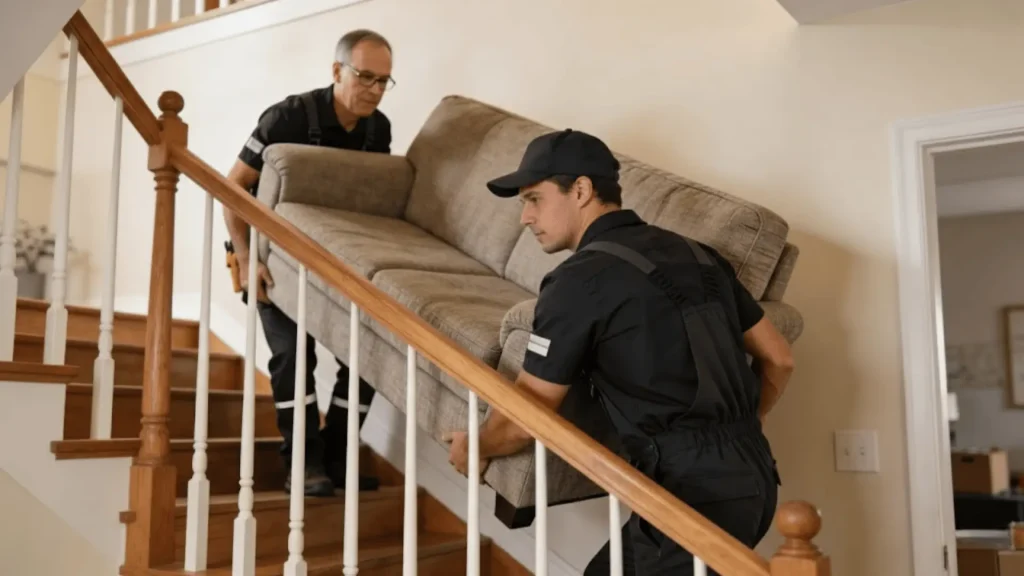
Think about the last piece of furniture you bought. A sofa, maybe, or a dining table. You probably chose it, paid for it, and owned it outright. But what happens when it wears out, or you move, or your style changes? For decades, the answer has been a one-way street: landfill, incineration, or a hopeful trip to the thrift store. Honestly, it’s a pretty wasteful model.
Well, a new wave of thinking is changing the game. It’s called the circular economy, and for furniture, it’s flipping the script from ownership to access. This isn’t just about recycling—it’s about redesigning the entire lifecycle of a chair or a desk. And the most exciting part? The rise of furniture-as-a-service (FaaS) and other product-as-a-service models. Let’s dive into how this works and why it might just be the future of how we furnish our spaces.
What is a Circular Economy for Furniture, Really?
At its heart, a circular economy aims to eliminate waste. It keeps products and materials in use for as long as possible. For furniture, this means designing pieces from the very start to be disassembled, repaired, refurbished, and eventually, broken down into materials that can become new products. It’s a closed loop, like nature’s own systems.
The traditional “take-make-waste” linear model is breaking down—both environmentally and, you know, economically. We’re drowning in bulky waste. Circular furniture models tackle this head-on by focusing on a few core principles:
- Design for Longevity & Disassembly: Using durable materials, timeless aesthetics, and screw-based joints instead of glue. So a chair can be fixed, not trashed.
- Take-Back & Resale Programs: Companies literally take their old products back to refurbish and resell them, often at a lower price point. This is a huge shift.
- Material Innovation: Sourcing recycled metals, plastics, and sustainably harvested woods, and developing new, biodegradable materials.
Product-as-a-Service: You Don’t Own the Sofa, You Enjoy It
This is where it gets really interesting. Product-as-a-service (PaaS) applies the “subscribe, don’t buy” mindset to physical goods. Instead of purchasing a desk, you subscribe to it. You pay a monthly or annual fee for its use, and the company retains ownership. This aligns perfectly with circular economy goals—here’s why.
The Business Model Shift
In a traditional sale, a company’s success depends on selling more units. In a PaaS model, their success depends on the long-term performance and durability of each unit. It completely changes their incentive. Suddenly, it’s in their best interest to make a sofa that lasts 20 years, not one you’ll replace in 5.
| Traditional Ownership | Furniture-as-a-Service (FaaS) |
| High upfront cost | Lower, recurring subscription fee |
| You bear all risk (damage, moving, style change) | Service provider manages maintenance, repair, replacement |
| End-of-life is your problem | Company ensures refurbishment or recycling |
| Asset depreciates in your home | Asset remains a company asset, circulating in the economy |
Who Benefits from This? Frankly, Everyone.
For consumers, it offers flexibility. Moving for a job? Swap your bulky items for pieces that fit your new place. Kids (or pets) destroyed the upholstery? The service covers repair. You get access to higher-quality, design-forward furniture without the massive initial investment.
For businesses, especially startups and flexible offices, it’s a godsend. It turns a capital expenditure (CapEx) into an operational one (OpEx), freeing up cash flow. Office furniture subscription services are, in fact, leading this charge.
And for the planet, the benefits are profound. This model promotes reuse over recycling, reduces raw material extraction, and designs waste out of the system. It’s a more efficient way to use resources, full stop.
The Real-World Hurdles & How We Get Past Them
Now, it’s not all smooth sailing. Transitioning to circular furniture models and PaaS is complex. The logistics are… daunting. Reverse logistics—getting a used sofa back from a customer, cleaning it, assessing it—is harder than shipping a new one from a warehouse. There’s also the mindset shift: we’re culturally wired to equate ownership with success.
And let’s talk cost. Designing for disassembly and using premium, sustainable materials often means a higher initial production cost. The economics only work if the product has multiple lifecycles. That said, pioneers are figuring it out. They’re investing in modular designs, local repair networks, and smart logistics software. The cost is coming down as the systems scale.
What This Means for Your Next Furniture “Purchase”
So, what does all this mean for you, right now? Whether you’re a homeowner, a renter, or a business manager, the landscape is changing. Here are a few ways to engage with this shift, even if you’re not ready to subscribe to your entire living room set.
- Look for Brands with Take-Back Schemes. More companies are offering them. It’s a clear sign they’re invested in their product’s entire life.
- Prioritize Quality & Repairability. Ask: “Can this be easily fixed?” Choose solid wood over particleboard, removable covers over fixed ones.
- Consider Rental for Temporary Needs. Need a crib for a year? A fancy chair for a short-term rental? Rental is the gateway to service models.
- Support the Second-Hand Market. Buying vintage or from a brand’s renewed collection is participating in the circle. It keeps stuff out of landfills and, honestly, adds character.
The move towards a circular economy for furniture isn’t just a trend; it’s a necessary redesign of a broken system. It asks us to value performance and experience over possession. To see our homes not as static museums of owned goods, but as dynamic, adaptable spaces filled with things that serve us—then move on to serve someone else.
It’s a quieter, more thoughtful relationship with the objects in our lives. One where the end of a sofa’s time with you isn’t an ending at all, but simply the next chapter in its long, useful life.

